Bedding Guide
Choosing Luxury Bed Covers for Comfort, Fit, and Easy Care
A duvet cover can change the whole mood of a bed—and the way it feels when you slip beneath the sheets. The right choice balances fabric, weave, fit, and care, bringing together a polished finish and the kind of everyday comfort you’ll appreciate long after the first night.
There is a particular pleasure in getting into a bed that feels just right: cool and smooth against the skin, comfortably layered, and neatly made without a wrestling match to keep the duvet in place. A luxury duvet cover plays a bigger role in that experience than its decorative surface might suggest. It protects the insert, affects how warmth and moisture feel overnight, and determines how easy it is to refresh the bed after laundry day.
But shopping for one can quickly bring a blizzard of terms: percale, sateen, long-staple cotton, linen, thread count, corner ties, interior flaps. A label may sound impressive without telling you whether a cover suits your sleep climate or your washing routine. The most useful approach is less about chasing a single “best” fabric and more about understanding the details that shape comfort and practicality.
Start with how you want the bed to feel. Then consider the construction and the realities of daily use: the size of your duvet, whether the cover has secure attachments, and whether its care instructions fit your household. A beautiful cover should look inviting, of course—but it should also make your bed easier to live with.
First, know what a duvet cover does
A duvet cover is a removable outer layer that encloses a duvet insert or comforter. Think of it as a washable protective shell that also sets the bed’s color, texture, and overall character. Instead of laundering a bulky insert every time the bed needs a refresh, you can usually remove and wash the cover according to its care label.
That arrangement makes the cover’s fabric and construction matter in two ways. They influence what you feel while sleeping, and they affect how well the bedding handles routine laundering. A very soft fabric may be appealing straight out of the package, but durability, closure design, and drying instructions help determine whether it remains a pleasure to use.
Choose a fabric by feel, not reputation
Luxury duvet covers often feature cotton or linen, though the words alone do not guarantee a particular experience. Fiber quality, yarn construction, weave, finishing, and the way a fabric is cared for all contribute to its hand and performance. If possible, consider the texture you enjoy against your skin and the temperature of your bedroom rather than choosing a material simply because it is described as premium.
Cotton: versatile and familiar
Cotton is a widely used bedding fiber because it can be woven and finished in many ways. Depending on the construction, a cotton cover may feel crisp, smooth, relaxed, or gently lustrous. Long-staple cotton is made from longer cotton fibers, which can be spun into smoother, stronger yarns when well processed. That can contribute to a refined surface, but it is only one part of the quality picture.
For an expressive finish, the Vivace Duvet Cover combines extra-long-staple cotton with printed sateen on the front and plain sateen on the reverse. Its buttons and inside ties are useful practical details, while the contrasting surfaces offer a little visual flexibility when the bed is turned down or styled more casually.
Linen: textured, airy, and relaxed
Linen is woven from flax fibers and is known for its distinctive texture and relaxed appearance. Many sleepers enjoy linen because its breathable character can make the bed feel less close or clingy. It also tends to develop a softer, more lived-in hand with use and laundering, though the exact result depends on the fabric and how it is finished.
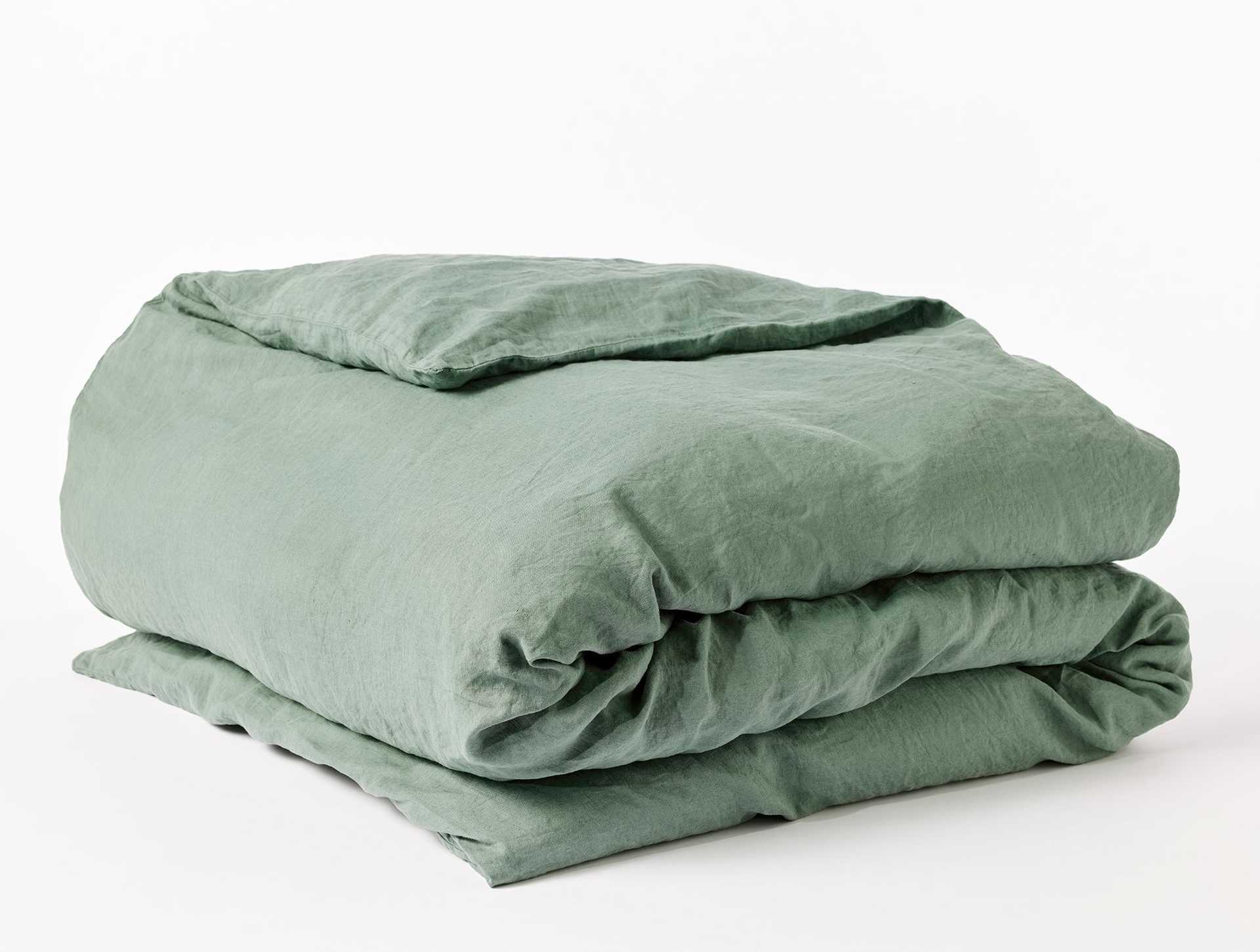
The Organic Relaxed Linen Duvet Cover is made from GOTS-certified organic French linen woven in Portugal. Its inside ties help secure an insert, and coconut shell buttons provide the closure. The relaxed finish is a natural fit for a bedroom where a softly rumpled look feels more welcoming than a sharply pressed, formal bed.
Linen is not automatically the right choice for every sleeper. Some people love its textured feel; others prefer the smoother surface of cotton. The best fabric is the one that feels comfortable in your own sleep environment and suits the amount of upkeep you are happy to do.
Understand the weave: sateen and percale
Weave is the way yarns cross to form fabric, and it has a noticeable effect on the surface. Two familiar cotton options are sateen and percale. Neither is universally superior; each offers a different feel, drape, and appearance.
- Sateen is often associated with a smooth hand, a fluid drape, and a subtle sheen. It can make a bed look softly polished and may appeal to anyone who prefers a sleek surface.
- Percale is commonly described as crisp and matte. Its lighter, fresh-feeling surface can suit people who like a more tailored, airy impression.
- Linen weave tends to have a more visible texture and an easy, relaxed look, with a feel that differs from smooth cotton finishes.
These descriptions are useful starting points, not guarantees. Finishing and yarn quality make a difference, and two sateen covers can feel quite different. If you know that you dislike a slippery surface or prefer a crisp one, use those preferences to narrow your choices before considering finer specifications.
Thread count is only one piece of the story
Thread count describes how many threads are woven into a square inch of fabric, but it cannot tell you everything about comfort or durability. It does not reveal the fiber quality, the yarn’s construction, the weave, or how the fabric has been finished. As a result, a higher number is not a reliable shortcut to a better night’s sleep.
Instead of focusing on one figure, look at the whole specification. What is the fiber? What kind of weave is used? Does the fabric feel appropriate for your preferences? Are the seams, closure, and attachment points thoughtfully made? A clear description of materials and care is generally more helpful than a headline number presented without context.
This is especially helpful when comparing luxury bedding. A well-made cover should feel good to you and hold up to its intended use—not merely carry a specification that sounds impressive. When details are available, use them together to build a realistic picture of the product.
Get the fit right before you fall for the color
A duvet cover can be beautifully made and still disappoint if it does not fit the insert. Check the cover’s stated dimensions and compare them with the insert—not just the size name. “Queen,” “king,” and similar labels can vary across brands and regions, so measurements are more useful than the category alone.
If the cover is substantially larger than the insert, the duvet may shift around inside and look loose or uneven. If it is too small, the insert can feel compressed and the cover may be difficult to close. A close match is usually the simplest way to achieve a smooth, balanced bed. If your duvet and cover come from different brands, measure both before buying and check the seller’s sizing guidance.
Also think about the finished look you prefer. Some people like a duvet that drapes generously over the sides of the bed; others want a neat, contained outline. That preference depends on the dimensions of the insert and cover, as well as the mattress height and how the bed is styled. The best fit is one that allows the insert to fill the cover without unnecessary bunching or pulling.
Look for secure attachments
Interior ties or loops connect the cover to the duvet insert at the corners, helping reduce shifting as you sleep or make the bed. They do not replace a good size match, but they can keep the insert more evenly positioned. Before choosing, check how many ties are included and whether the insert has corresponding loops.
The closure at the opening matters, too. Buttons, zippers, and other closures all have their own feel and convenience. Buttons can offer a traditional finish, while a zipper may be quick to close. Consider how you change the cover and whether the closure feels comfortable and secure for your routine.
Small construction details make everyday life easier
When a bed is freshly made, the fabric may get all the attention. Over time, it is often the little construction choices that prove their worth. Interior ties help limit shifting, and an interior flap can conceal the opening and provide an extra layer of coverage. Button spacing and closure placement can affect how easy the cover is to manage when you are changing it on your own.
Pay attention to the seams and edges as well. A simple hem creates a restrained finish, while piping or a border can give the bed a more tailored outline. These details are partly aesthetic, but sound construction is also important for an item that may be removed, washed, and replaced regularly.
If you like a tidy bed but do not want to spend time rearranging it each morning, prioritize a cover with secure ties and an insert that fits well. Those practical choices often do more for a smooth, composed finish than an elaborate styling routine.
Choose for your sleep climate
The fabric next to you can contribute to how warm, cool, or comfortable the bed feels. That does not mean a cover controls temperature on its own: the duvet insert, sheets, room conditions, and your personal preferences all play a part. Still, the surface and drape of a cover can change the sensation of the bed.
If you tend to feel warm, you may prefer a cover with a breathable, less clingy feel. Linen is often chosen for its airy texture, while cotton offers a range of weaves and finishes to explore. If you enjoy a smooth, softly draped surface, sateen may be appealing. For a crisp, more structured touch, look at percale options.
Consider the whole bedding combination, too. A heavy insert under a lightweight cover may feel very different from a lighter insert under the same fabric. If you change your duvet with the seasons, a removable cover makes it easier to adjust the appearance without replacing the outer layer.
Make care part of the buying decision
Care instructions are not fine print to ignore until laundry day. They are part of whether a cover works for your home. Some fabrics can be machine washed on a gentle cycle and tumble dried on low; others may call for specific temperature limits, a careful detergent choice, or a different drying method. Always follow the product’s care label, since instructions can vary even among covers made from similar fibers.
Before buying, ask yourself a few practical questions: Can the cover fit comfortably in your washing machine? Do you have room to dry it as directed? Are you willing to iron, or do you prefer a relaxed finish that does not need pressing? A cover that looks lovely but demands more maintenance than you enjoy may not feel like a luxury for long.
For example, the care guidance for the Vivace cover recommends a delicate machine wash with mild detergent, low tumble drying, and removing the cover while damp to help reduce wrinkles. The Organic Relaxed Linen Duvet Cover can be washed on a cold gentle cycle and tumble dried on low, with warm ironing listed as optional. These differences show why checking the specific instructions matters more than relying on general assumptions about a fabric.
A few everyday habits can help keep bedding in good condition: close fastenings before washing, wash similar colors together, avoid overloading the machine, and do not leave damp laundry sitting for long periods. But the care label should always take priority over a general routine.
A simple checklist for comparing luxury duvet covers
When two covers look equally appealing, a short comparison can make the decision feel clearer. Check the details that affect your day-to-day experience, rather than comparing only color or price.
- Fabric: Does the fiber and surface match the feel you like against your skin?
- Weave: Do you prefer the smooth drape of sateen, the crisp impression of percale, or the texture of linen?
- Specifications: Are fiber quality, construction, and finishing described clearly? Treat thread count as one detail among several.
- Dimensions: Do the cover and insert measurements align closely?
- Attachments: Are there interior ties or loops to help keep the duvet in place?
- Closure: Is the opening secured with a style you find convenient?
- Care: Can you follow the washing and drying instructions with the equipment and time you have?
- Appearance: Does the texture, color, and finish work with the bedroom you want to create?
The best cover is the one you love using
A well-chosen duvet cover earns its place through more than a polished first impression. It feels inviting night after night, fits the insert without constant adjustment, and can be cared for without turning laundry into a special project. That everyday performance is part of what makes bedding feel genuinely luxurious.
Start with comfort, then check the details: fabric and weave, measurements, attachment points, closure, and care instructions. If you prefer a smooth, fluid look, cotton sateen may be the direction to explore. If you want a softly textured, relaxed bed, linen may feel more natural. Neither choice is a universal winner; the right one is the one that suits your preferences, your room, and your routine.
The result need not be complicated. A cover that feels good, fits properly, and is easy enough to maintain can make an ordinary bedtime feel like a small daily pleasure—and keep the bed looking composed long after laundry day.